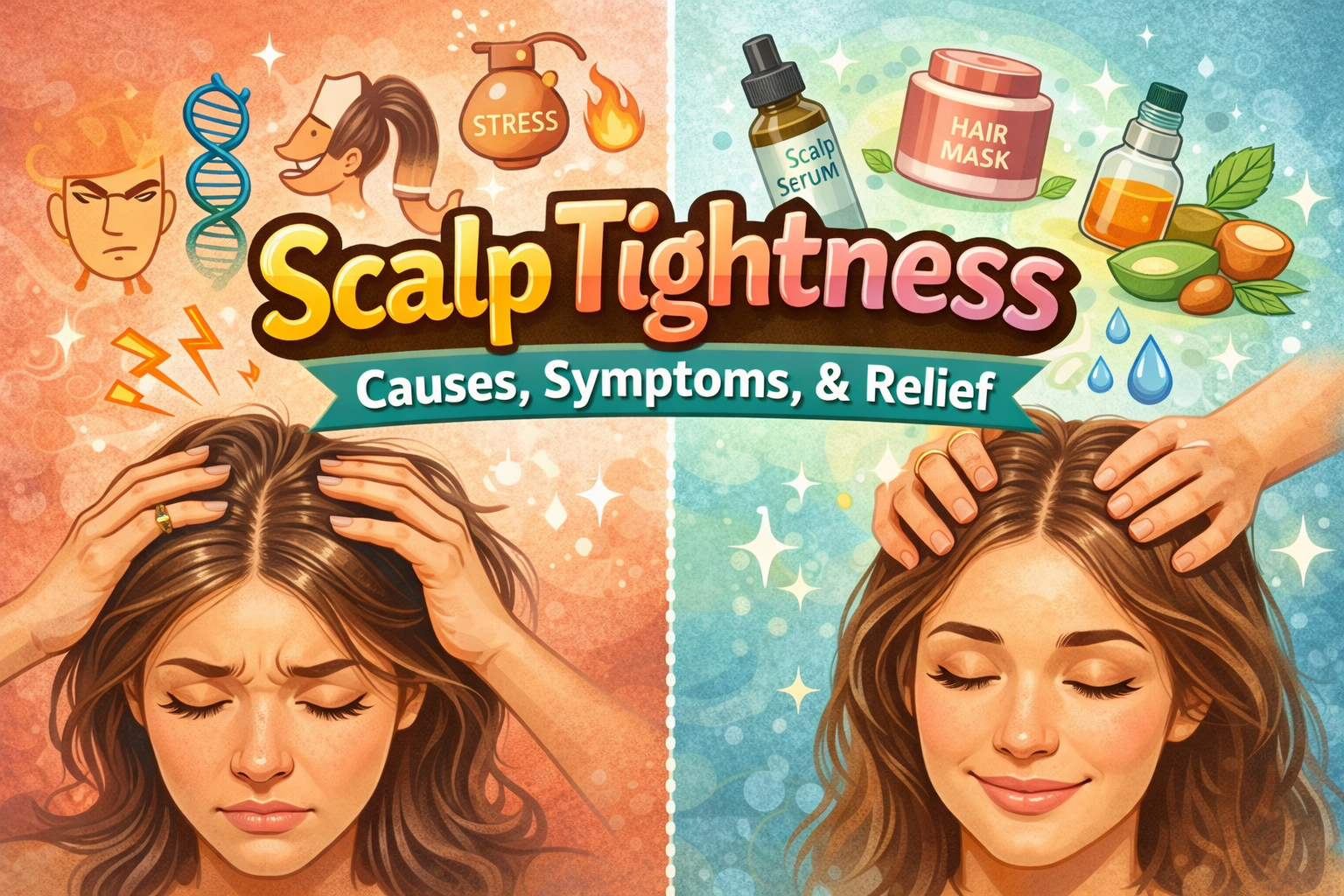
Do you ever feel like your scalp is pulling, tight, or tense? You’re not alone. Scalp tightness is a common issue that affects people of all ages.
While it can sometimes be mild and temporary, it can signal stress, poor circulation, tight hairstyles, or other scalp concerns.
The good news? With the right techniques and care, you can relieve tension and keep your scalp healthy.
In our guide, we’ll cover the causes, symptoms, and practical ways to relieve scalp tension, from home remedies to professional spa treatments.
Understanding Scalp Tightness
1️⃣ Scalp Anatomy & Circulation
Your scalp contains a network of blood vessels, nerves, and tiny muscles that support hair follicles and maintain scalp health.
When circulation slows or tension builds, the scalp can feel tight or uncomfortable. Poor circulation can reduce the delivery of oxygen and nutrients to hair follicles, potentially affecting hair health over time.
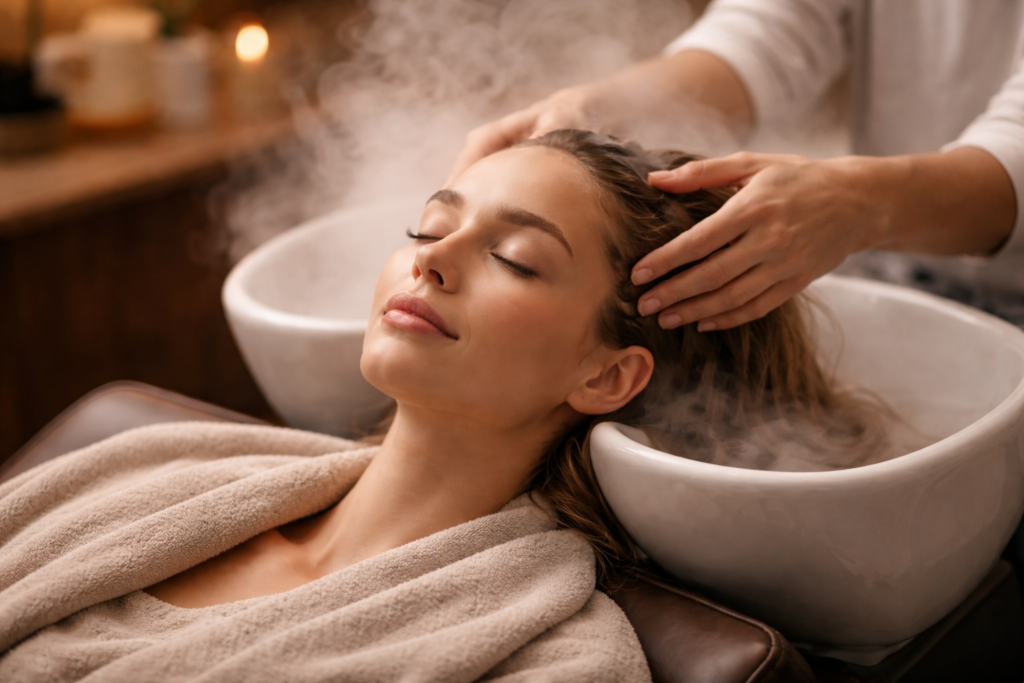
🌿 Tip: Regular massage improves circulation and relaxes tight muscles in the scalp.
👉 Learn scalp massage techniques to help with scalp circulation issues
2️⃣ Common Causes of Scalp Tightness
Several everyday habits and lifestyle factors can lead to tight scalp causes, including:
- Stress and tension, such as emotional stress, can cause scalp muscles to contract. Learn more in our guide on stress and scalp health
- Tight hairstyles such as ponytails, braids, buns, or extensions that pull on follicles.
- Environmental stressors, such as heat, cold, weather, or scalp dehydration.
- Poor posture is another cause of scalp tightness, as the jaw and neck tension can radiate upward into the scalp.
- Using heavy products can cause irritation and restrict scalp movement.
🌿 Tip: Rotating hairstyles and avoiding tight pulling styles can reduce scalp strain.
3️⃣ Scalp Tension Symptoms
Common scalp tension symptoms include:
- A pulling or tightening sensation on the scalp
- Tenderness when touching the scalp
- Mild headaches or pressure around the temples
- Tingling or itching
- Increased scalp sensitivity
Sometimes these symptoms are temporary, but persistent discomfort may indicate deeper tension or circulation issues.
Why Your Scalp Feels Tight
Understanding why the scalp feels tight can help you address the root cause.
1️⃣ Muscle Tension in the Scalp
Your scalp contains tiny muscles connected to hair follicles. When stress or tension occurs, these muscles contract, creating a tight or pulling sensation across your head.
It can often happen alongside:
- Stress
- Jaw clenching
- Neck tension
- Long hours at a desk
🧘♀️ Gentle stretching of the neck and temple can relieve scalp tension.
2️⃣ Scalp Dehydration or Sensitivity
A dehydrated or irritated scalp may feel tight and uncomfortable.
Common triggers include:
- Harsh shampoos
- Weather changes
- Product buildup
- Skin sensitivity
👉 Learn how to deal with a sensitive scalp
Hydrating treatments and gentle scalp care can restore balance.
3️⃣ Scalp Tightness and Hair Loss
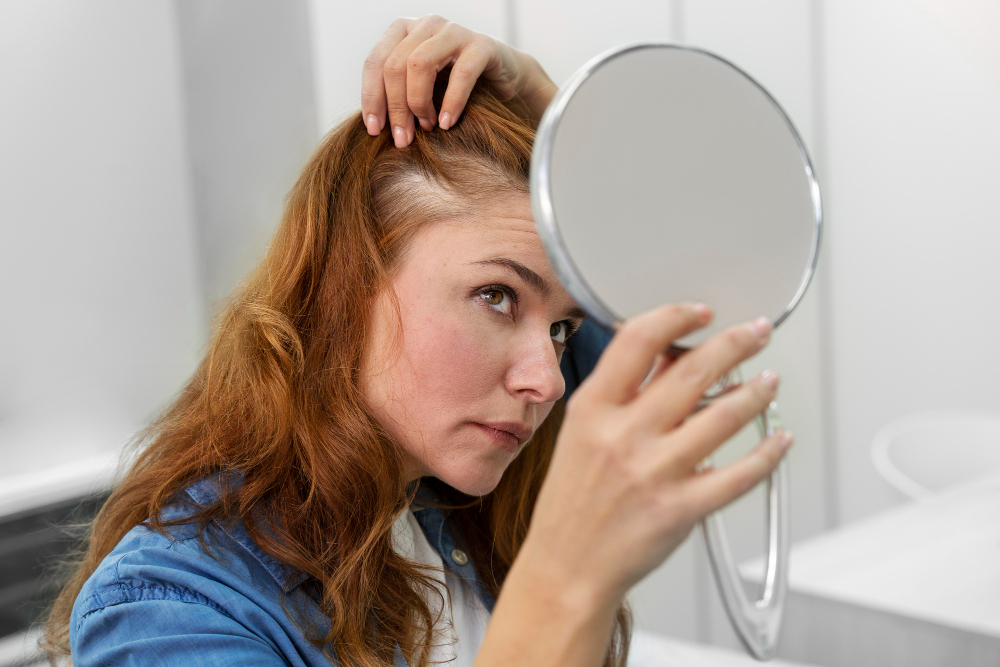
Many people worry about the connection between scalp tightness and hair loss.
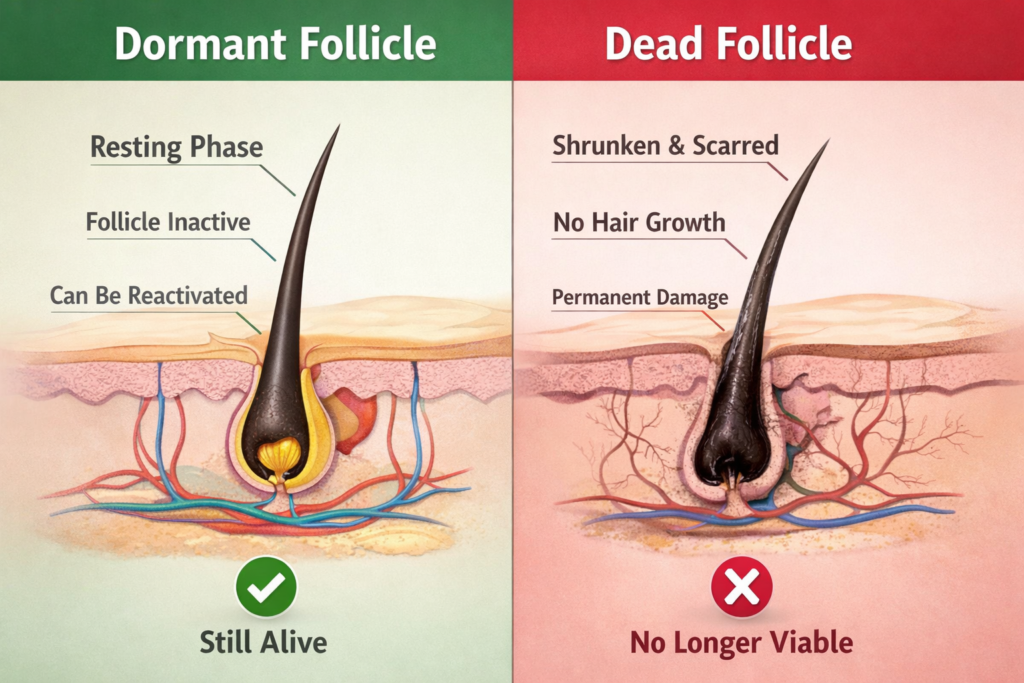
While tightness itself doesn’t always cause hair loss, long-term tension and reduced circulation can stress hair follicles.
Poor circulation may limit nutrient delivery to the hair follicles, weakening hair over time.
🌿 Tip: Improving scalp circulation through massage and hydration can support follicle health.
👉 Learn more about how scalp treatments help with hair loss
How to Relieve Scalp Tightness at Home
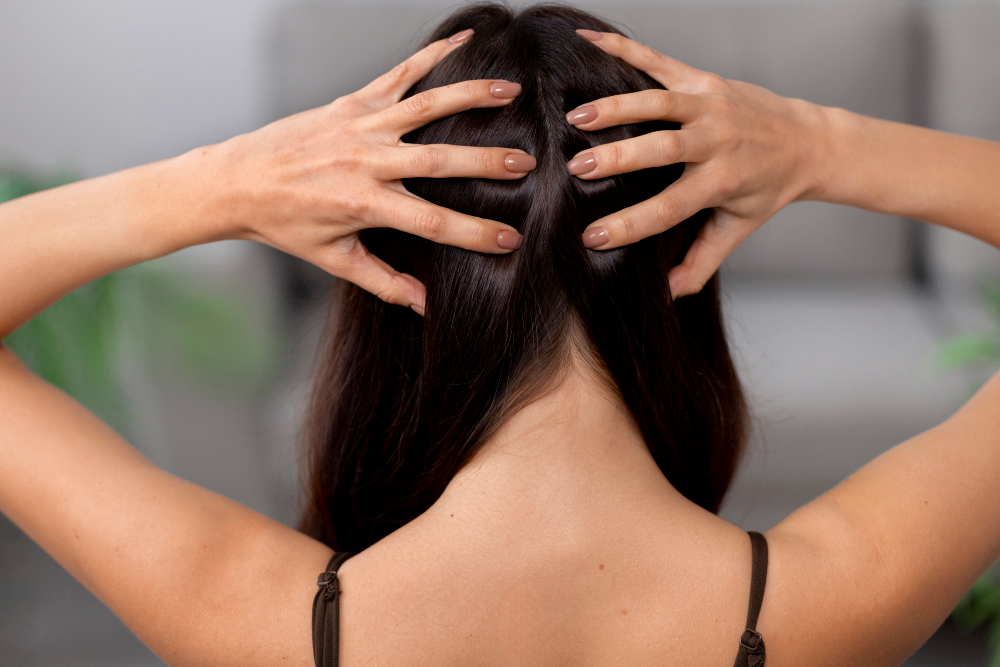
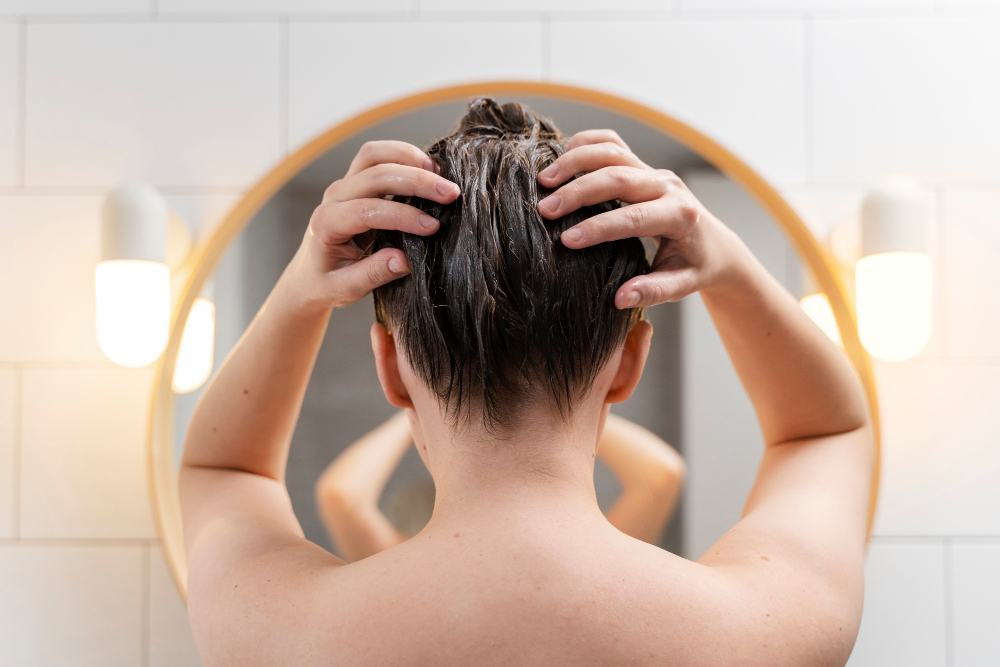
Scalp Massage Techniques
Scalp massage is one of the most effective ways to relieve scalp soreness.
- Use your fingertips, not nails.
- Massage in small circular motions.
- Focus on temples, crown, and nape.
- Massage for 5-10 minutes daily.
Massage stimulates circulation and relaxes the muscles surrounding hair follicles.

Hair Care & Styling Adjustments
Tight styles often contribute to scalp tension:
- Avoid tight ponytails and braids
- Alternate hairstyles regularly
- Detangle gently from the ends upward
- Use soft hair ties
✨ Learn more about what hairstyles damage your hair
Relaxation and Stress Management
Stress is one of the most overlooked causes of a tight scalp.
Relaxation techniques that help include:
- Meditation
- Yoga
- Deep breathing
- Light exercise
Even 5-10 minutes of relaxation daily can noticeably reduce scalp tension.
👉 Learn more about stress and scalp health
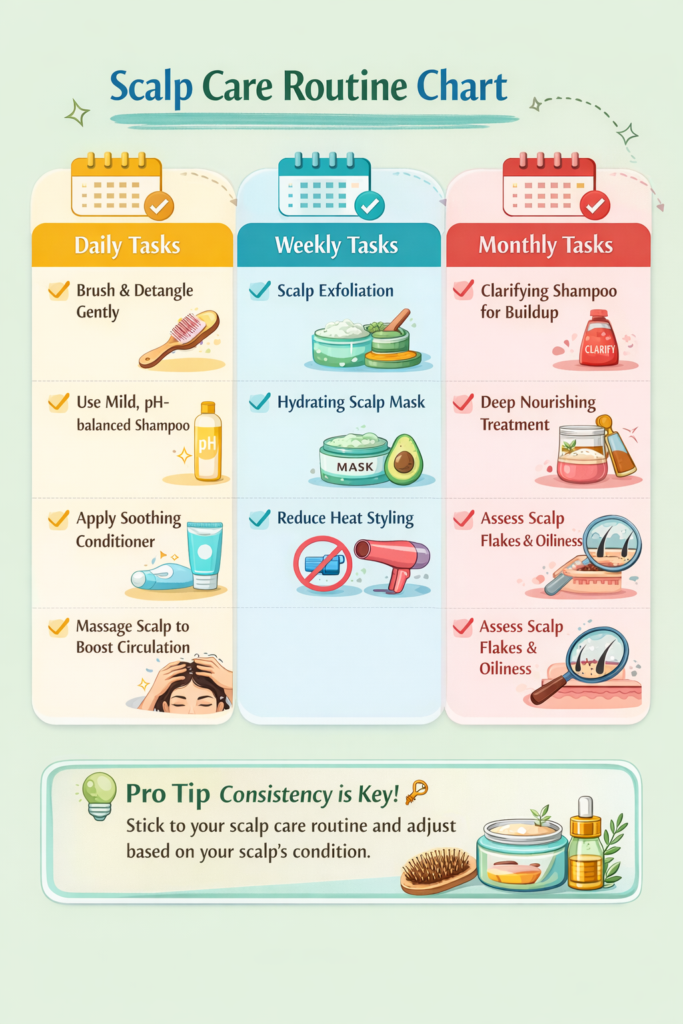
Hydrating Scalp Treatments
Adding hydration and nourishment to your hair routine can help relieve scalp tightness.
Helpful treatments include:
- Scalp serums
- Hydrating masks
- Mild exfoliation treatments
- Natural oils such as jojoba or argan
These treatments restore scalp balance and support healthy follicles. Check out our scalp services today to help relieve scalp tension.
When to Seek Professional Help for Scalp Tightness
Sometimes scalp tightness may require professional care.
Consider consulting a stylist or specialist if you experience:
- Persistent scalp pain
- Tingling or numbness
- Hair thinning or shedding
- Severe scalp sensitivity
Professional scalp treatments can combine massage, hydration, and exfoliation to restore circulation and comfort.
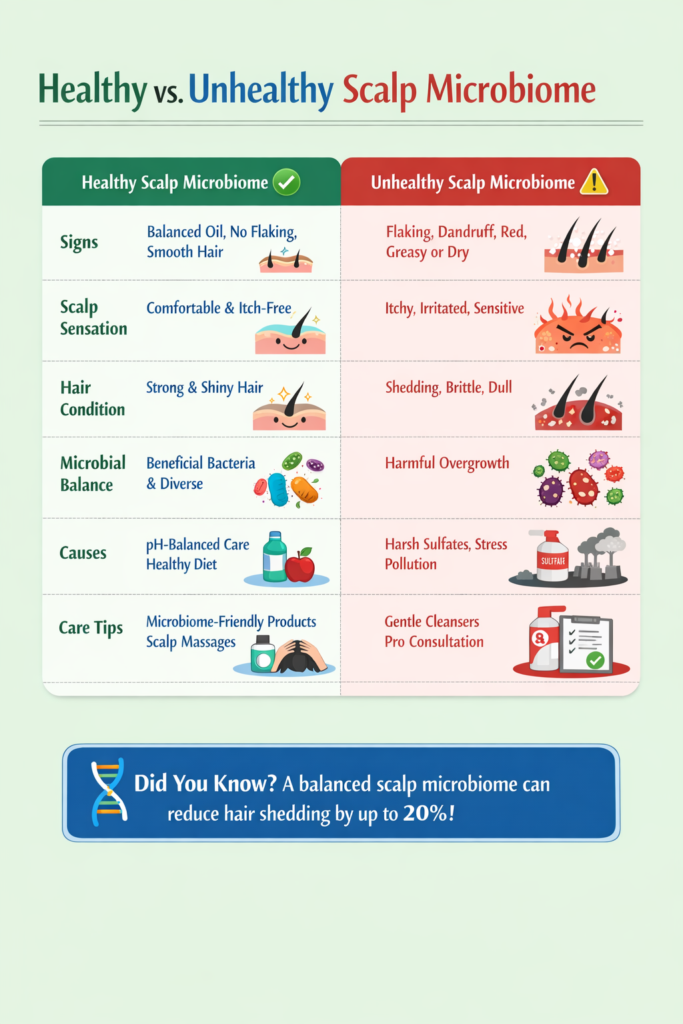
Maintain a Relaxed, Healthy Scalp
Healthy scalp habits can prevent recurring tension.
Simple steps include:
- Regular scalp massage
- Gentle hair styling
- Hydrating scalp treatments
- Managing daily stress levels
Consistent care helps maintain healthy circulation and comfortable scalp movement.
Relax Your Scalp at Haste Urban Hair Spa
Transform your scalp health with expert care today. At Haste Urban Hair Spa, we specialize in treatments designed to relieve scalp tension, improve circulation, and restore scalp balance.
Our professional services include:
- Relaxing scalp massages
- Hydrating scalp therapies
- Circulation-boosting treatments
- Personalized scalp consultations
Book a consultation today and experience professional scalp tightness relief.
FAQ
Can stress cause scalp tightness?
Yes. Stress can cause muscles in the scalp and neck to contract, creating tension and tightness.
Is scalp tightness related to hair loss?
Sometimes prolonged tension and poor circulation may affect hair follicles, but early treatment can prevent long-term issues.
How often should I massage my scalp?
Daily massage for 5–10 minutes can significantly improve circulation and relaxation.
What products help with scalp tightness?
Hydrating scalp serums, gentle exfoliating treatments, and soothing oils are helpful for scalp tightness.
When should I see a professional?
If tightness is persistent, painful, or accompanied by hair thinning, we recommend you see a professional.