April 24, 2025
Cutting Curly Hair: Step-by-Step Guide for All Curl Types

Cutting curly hair can feel intimidating. Each curl has its own personality, shrinkage behavior, and bounce, making standard hair-cutting techniques less effective.
Many people struggle with curls appearing too short, uneven layers, or frizz after a cut. The wrong method can ruin months of growth and styling efforts.
According to stylists and curly hair specialists, understanding curl type and using the proper cutting techniques can prevent shrinkage, preserve curl shape, and enhance volume. Appropriate tools, step cutting, and layering are key.
In this guide, we’ll cover everything from identifying your curl type and choosing the right tools to step-by-step cutting methods, common mistakes to avoid, and aftercare tips. You’ll walk away ready to cut curly hair confidently.
Know Your Curl Type
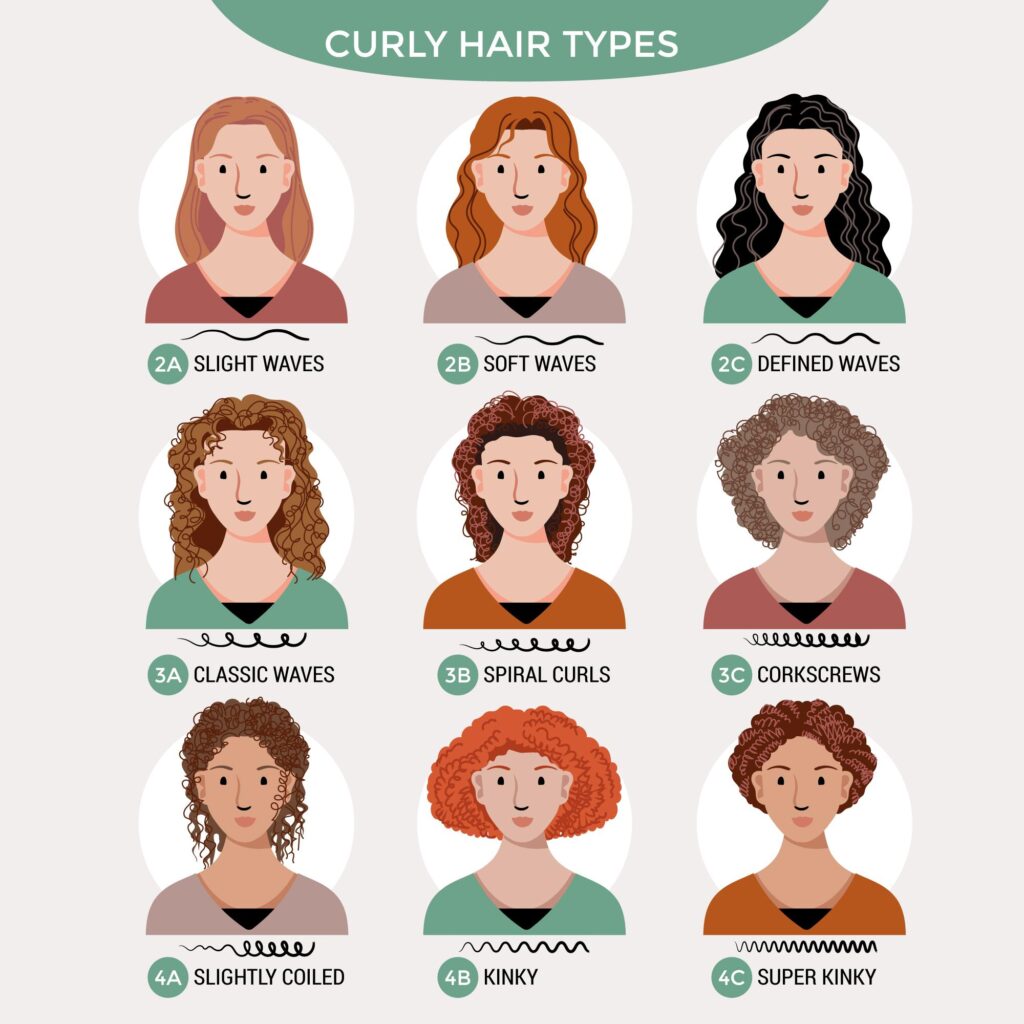
Curly hair comes in many patterns. Identifying your curl type helps determine the best cutting technique.
- Type 2 (Wavy): Loose waves; less shrinkage.
- Type 3 (Curly): Defined spirals; moderate shrinkage.
- Type 4 (Coily/Kinky): Tight coils; significant shrinkage.
✂️ Tip: Always cut curls dry to see the actual length and shape. Wet hair can shrink 20–50%.
Tools You’ll Need
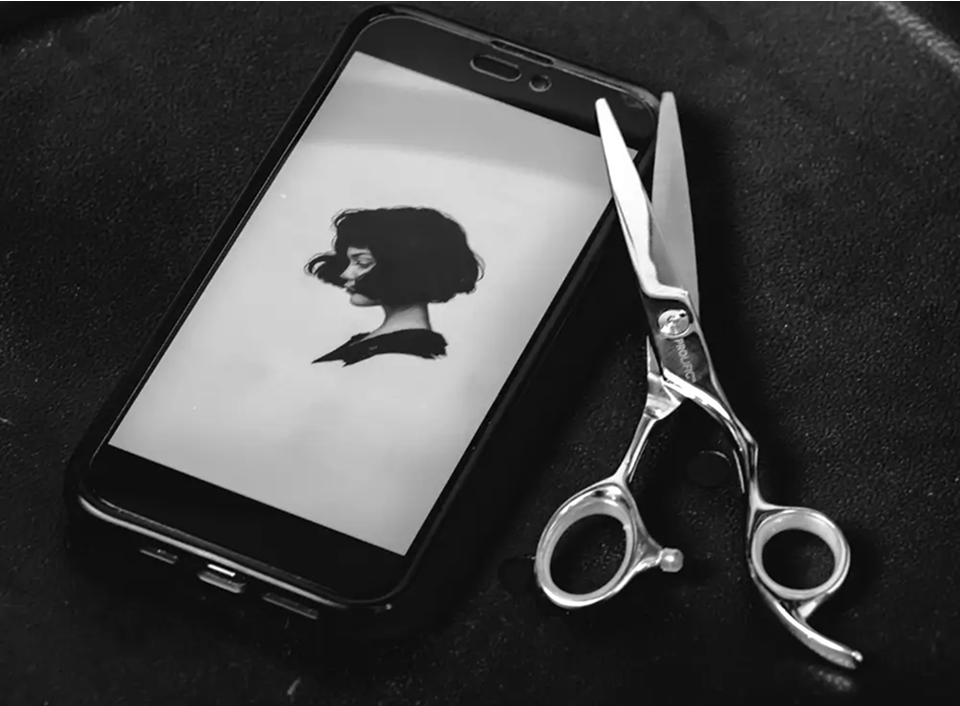
Using the right tools is crucial for curly hair:
- Sharp Hair Cutting Scissors: For precision cuts.
- Texturizing Shears: For removing bulk without flattening curls.
- Wide-Tooth Comb: For detangling gently.
- Hair Clips: To section curls for organized cutting.
- Spray Bottle (water): Optional for slightly damp curls if needed.
✂️ Tip: Avoid regular kitchen scissors—they create frizz and uneven ends. Learn more in our article The Perfect Haircut in Boston.
Cutting Techniques
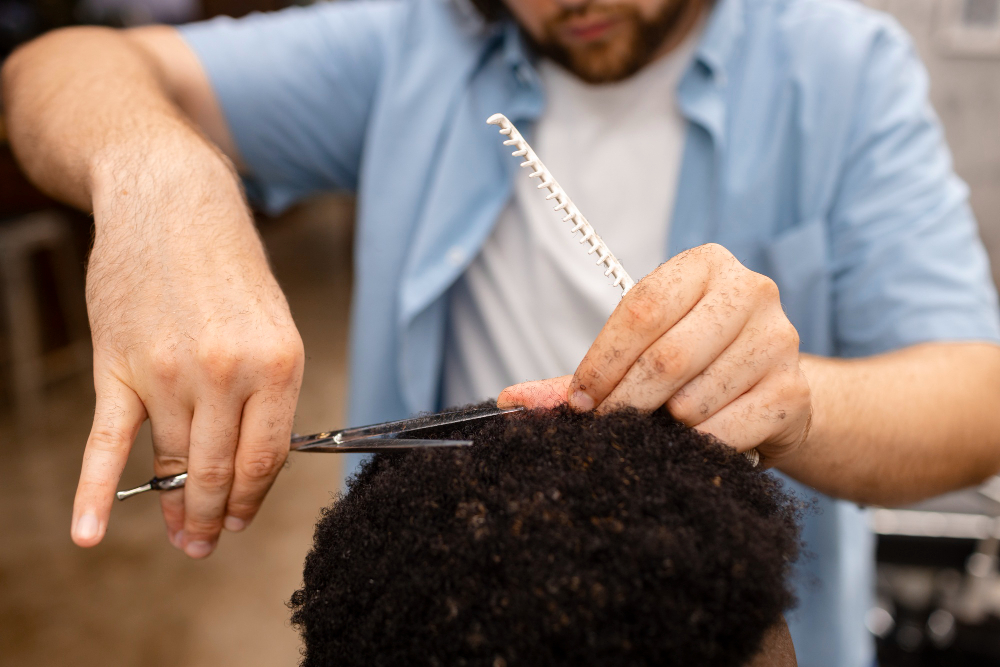
Wet vs. Dry Cutting
- Wet Cutting: Hair is easier to detangle and section. However, curls shrink after drying, making it hard to gauge the final length.
- Dry Cutting: Ideal for curls because you can see their natural shape and bounce, check the Deva Cut
✂️ Tip: Combine methods: dry-cut for shaping and wet-cut for trimming split ends.
Layering & Step Cutting
- Layering: Reduces bulk and allows curls to spring naturally.
- Step Cutting: Cut curls in sections, starting from the bottom layer and working up. Each curl should fall naturally to reveal its length.
✂️ Tip: Always cut small amounts first—you can always trim more, but you can’t add length back.
Point Cutting & Texturizing
- Point Cutting: Snip vertically into the ends to soften blunt edges.
- Texturizing: Removes weight without flattening curls. Focus on thick sections that cause pyramid shapes.
✂️ Tip: Hold hair in its natural curl pattern when cutting—don’t stretch it.
Special Cuts for All Ages and Styles
- Children: Use larger sections and avoid over-layering.
- Adults: Layer according to curl type and face shape.
- Men: Keep sides tapered and maintain volume on top.
✂️ Tip: Always ask yourself how much shrinkage they prefer—some curls shrink up to 50%!
👍 Check out our Haste Hair Services and Our Precision Hair Cutting
Common Mistakes to Avoid
- Cutting curls too short without factoring in shrinkage.
- Ignoring the curl pattern or natural fall.
- Over-layering can cause frizz.
- Using blunt scissors or dull tools.
✂️ Tip: Always check the hair from multiple angles to ensure evenness.
👍 Learn more about professional haircuts for women.
Aftercare Tips

- Use leave-in conditioner or curl cream immediately after a cut.
- Avoid brushing dry curls—use fingers or a wide-tooth comb.
- Regular trims every 8–12 weeks prevent split ends.
- Encourage clients to embrace natural curl patterns for better styling.
Want a transformative haircut? Please read our article to learn how you can transform your hair.
Tips For Cutting Certain Curl Types

Cutting Wavy Curls (Type 2)
- Focus on the natural wave pattern to enhance movement.
- Use layering techniques to avoid a flat or weighed-down look.
- Trim carefully to prevent split ends and dryness.
- Optional: Add subtle highlights or balayage to emphasize texture.
✂️ Tip: Always cut a small amount at a time—waves shrink slightly when dry.
Cutting Spiral Curls (Type 3)
- Maintain the desired length while removing excess bulk.
- Add layers strategically to enhance volume and prevent a triangular shape.
- Check curl springiness as you cut to ensure even shape.
✂️ Tip: For cutting curly hair with ringlets, avoid over-layering—the natural spiral should define itself.
Cutting Coily Hair (Type 4)
- Use sharp, high-quality scissors and work gently to avoid breakage.
- Slightly damp hair is easier to section without stretching the curls too much.
- Apply a leave-in conditioner after cutting to retain moisture.
✂️ Tip: When it comes to cutting curly hair, cut in small sections and follow the curl pattern for the most natural look.
Cutting Curly Hair
When you visit us at Haste Urban Hair, our stylists have mastered cutting curly hair because they are familiar with the different curl patterns.
We utilize dry-cutting methods with the appropriate tools to achieve optimal results. We provide you with the best aftercare advice and recommend the proper products. Book your curly haircut with us today to give those curls a bounce.
FAQ
Should I cut curly hair wet or dry?
Dry cutting shows the curls’ actual shape and length, while wet cutting is helpful for minor trims or detangling. Always account for shrinkage when cutting.
How do I avoid making curls too short?
Cut in small sections and always factor in shrinkage, as curls appear shorter once dry. Trim gradually to ensure the desired length.
Can I cut curly hair at home?
Yes, with sharp scissors, proper sectioning, and patience, you can safely trim your curls at home. Follow step-by-step techniques for the best results.
What tools are best for curly hair?
Use sharp scissors, texturizing shears, a wide-tooth comb, clips, and a spray bottle for controlled, precise cuts. These tools help prevent frizz and split ends.
How often should I trim curly hair?
Trim every 8–12 weeks to maintain curl shape and prevent split ends. Regular trims keep curls healthy and well-defined.
Medford, MA
Hāste Urban Hair Spa