If you’re thinking about bleaching virgin hair for the first time, you’re not alone and not crazy for feeling a bit nervous. Virgin hair (a.k.a hair that’s never been dyed, chemically processed, or relaxed) is an ideal canvas for color.
But even your healthy strands need the correct care and technique to survive bleaching. At Haste, we’ve helped countless clients go blonde, silver, and pastel, and we’ve seen what works and what doesn’t.
Our experience will help you bleach your virgin hair to get it right the first time.
Why Virgin Hair Bleaches Differently
When it comes to your virgin hair, it responds faster to bleach compared to processed hair. Because your hair hasn’t been chemically altered, the cuticle layers are intact, allowing the bleach to lift the natural pigment more effectively.
But that doesn’t mean it’s always foolproof. Without the proper prep and technique, even your healthy virgin hair can become dry, brittle, and patchy.
What to Know Before Bleaching Virgin Hair
Hair bleaching is a chemical procedure designed to lighten hair color. The process uses a peroxide-based solution that deconstructs the natural pigments in the hair.
If you have dark hair, it has a higher pigment concentration, which means the process of lightening the color takes longer.
We consider your original shade and hair health when determining the processing time to provide the best results. Sometimes, darker tones lighten to yellow or reddish hues.
When it comes to bleaching virgin hair, especially if you have lighter hair, we can easily achieve platinum shades or pale blonde. Yet bleaching hair still has adverse effects, as the chemicals are strong and can impair the hair shaft, stripping your natural pigments.
It compromises the protective outer layer, leading to moisture loss, dryness, and fragility. For this reason, you must prep your hair and follow an aftercare routine to prevent hair breakage.
That’s why it’s so important to book a hair consultation with our colorist first to determine the following, and the same must be done at home if you plan to bleach your hair:
Assessing The Health of Your Hair
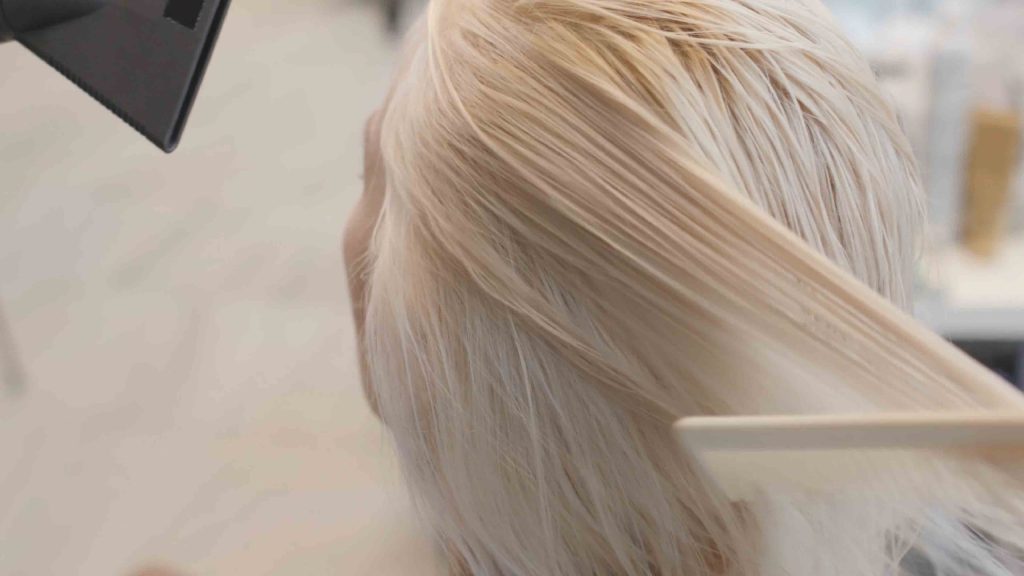
Before we start bleaching your hair, we do a thorough health assessment.
- If your hair is damaged, over-processed, or dry, we recommend a hair treatment to help prevent further damage.
- It is especially true if you have previously dyed your dark hair, as the bleach or blonde dye may not lift effectively.
- The same applies if you have a texture-altering treatment, such as keratin or perming. We recommend waiting at least a month before bleaching your hair.
We Test For Sensitivity and Allergies
As with any new skin product, you should perform a patch test to determine whether you have an allergic reaction or sensitivity to it. We usually perform a small test patch on the back of your ear or inside your elbow. We wait 30 minutes, and we continue if you feel no itching or discomfort.
Choosing The Correct Bleach and Developer
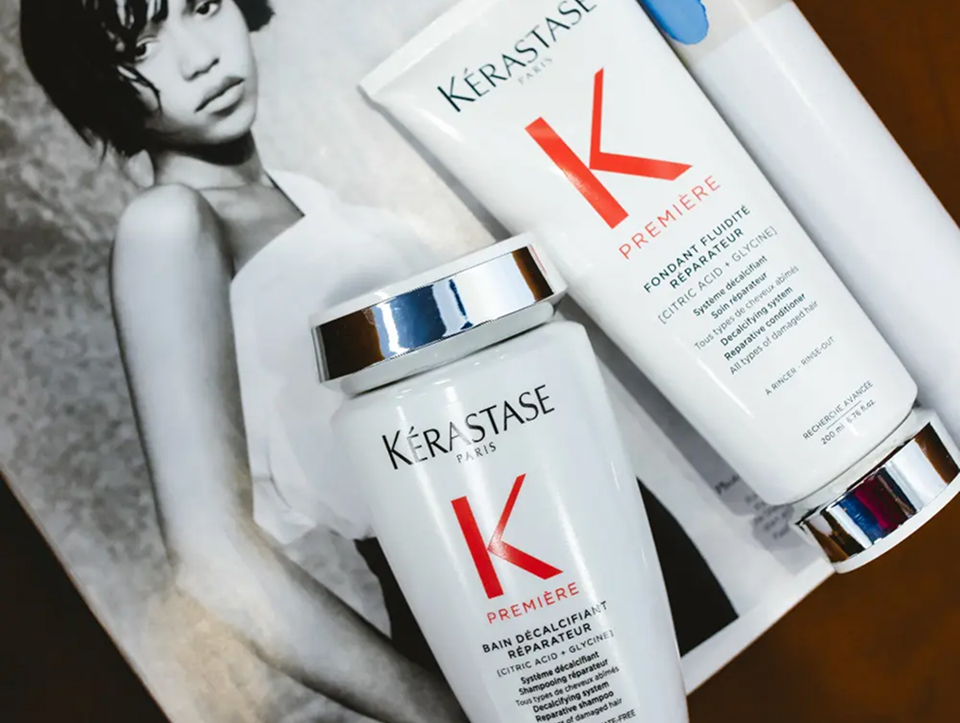
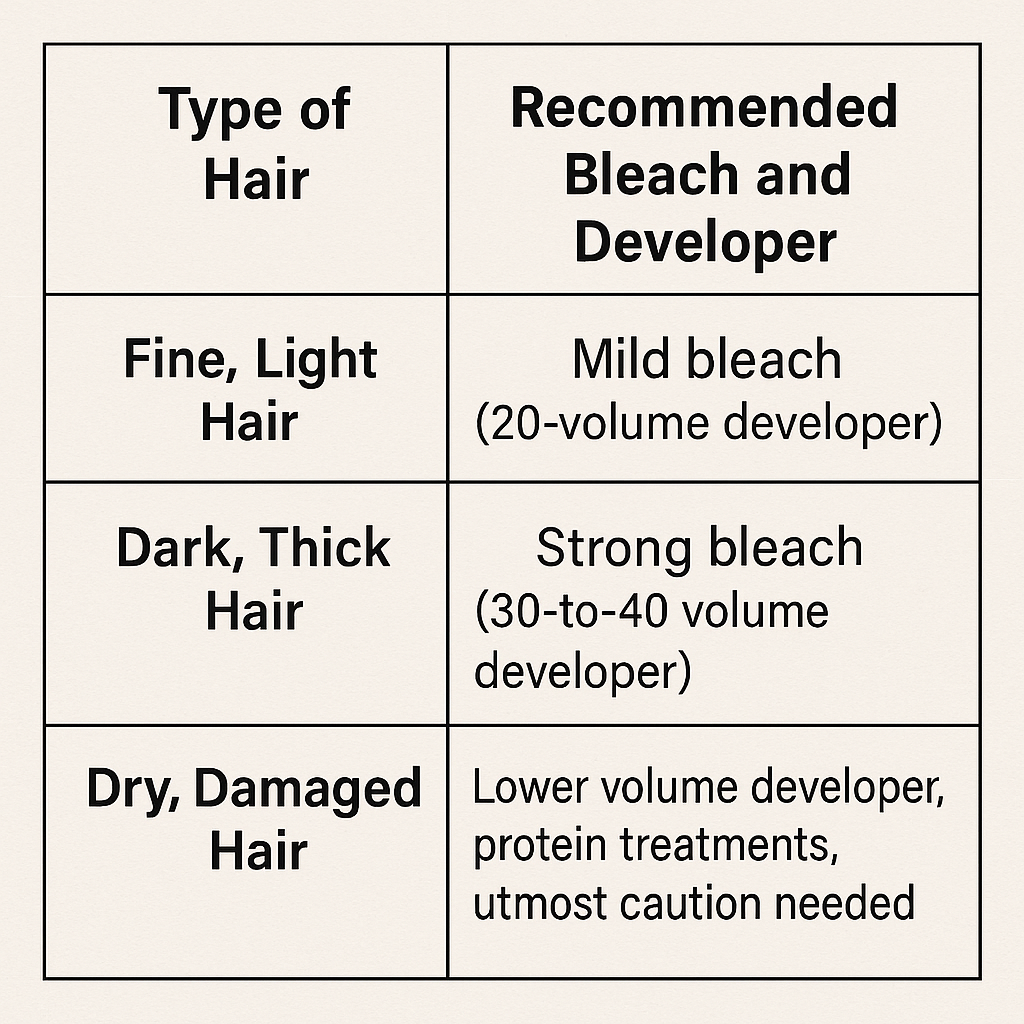
We must select the best bleach and developer for bleaching virgin hair. The right one will depend on your hair color, health, and texture. Then we choose one as seen in the image below:
Steps For Bleaching Virgin Hair
You must understand the process of bleaching virgin hair, especially when doing it at home.
1. Unprocessed Hair Provides The Best Results
Virgin hair is unprocessed and can provide the best results compared to previously colored or chemically treated hair. If you have had these treatments, give your hair time to recover. Bleach works better on natural, clean hair, as it processes evenly, allowing you to achieve your desired color more effectively.
2. Gather Your Materials
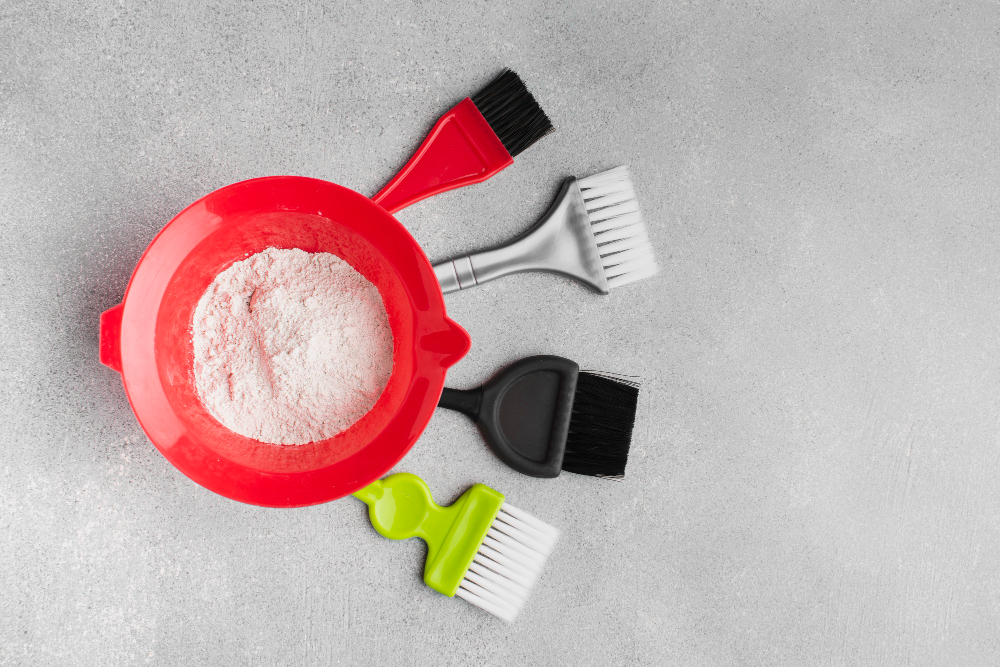
Next, get your gloves, bleach powder, mixing bowl, brush applicator, and developer with clips for sectioning your hair. Put on your old clothes and have a towel and a timer on hand. Then mix as needed, but use less bleach for highlighting.
3. Hydrate Your Hair
Before you bleach your hair, we always recommend providing your strands with deep hydration to protect them from the chemicals. It will form a barrier to lock in the moisture. You can use a deep conditioner, starting at least a week before you bleach your hair.

4. Part Your Hair
Once the formulas are mixed, part your hair into manageable sections with your clips. You can divide your hair into four sections, two in the front and two in the back.
5. Apply The Bleach
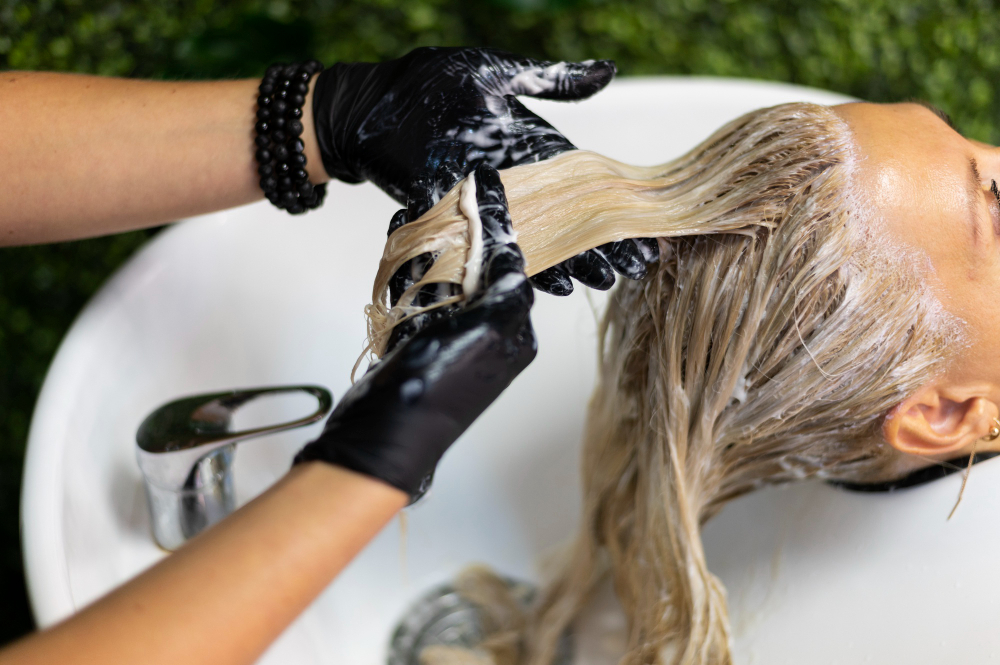
Start applying the bleach from mid-lengths, avoiding the roots, as your scalp processes heat and will turn the roots lighter faster. Ensure that every strand is covered, but do not rush it, and end with the roots, allowing the mid-lengths to get enough time to lift.
6. Set Your Timer and Then Rinse Out
Now, set your time to the recommended time on the instructions and never exceed it, as it can result in over-bleaching your hair. Also, check your hair every ten minutes to see how it’s processing.
Once the time is up, rinse the bleach from your hair with lukewarm water, ensuring everything is thoroughly rinsed. Then, follow it up with deep conditioning to help replenish your hair. Gently towel-dry the hair and assess the color.
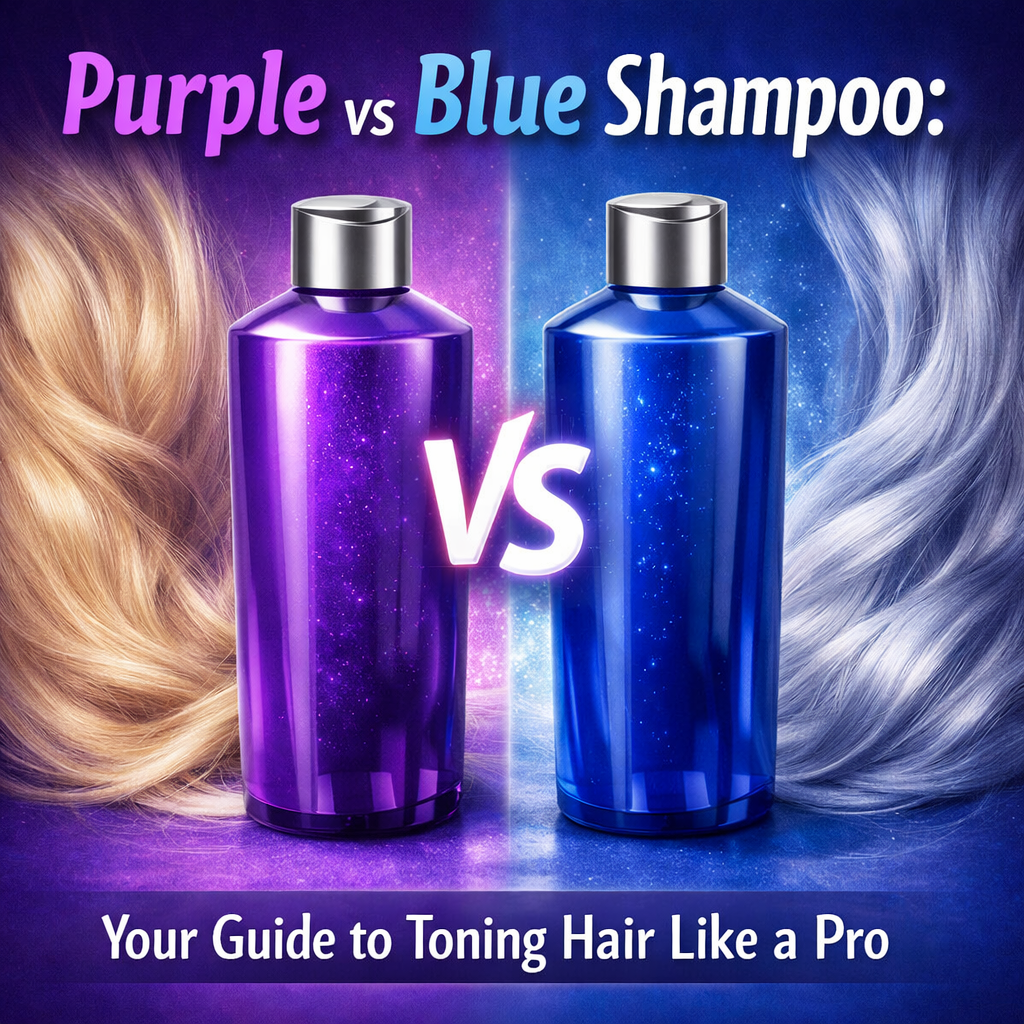
If you feel your hair isn’t light enough, you must give it a rest before going for another round of bleaching. Let your hair air-dry to see the true shade, then use a toner or purple shampoo if you notice yellow or brassy tones.
7. Aftercare
Now that you’ve bleached your virgin hair, you must give it extra care. We recommend using a mask or deep conditioner to help restore the lost moisture.
You can also apply a hair oil, such as jojoba or argan, to give your hair some shine. For now, we recommend avoiding heat styling to let your hair recover. Explore these great alternative heatless styling options.
Ensuring Healthy Bleached Virgin Hair
Bleaching virgin hair does not have to lead to damage, especially when done correctly by a professional colorist.
Following proper precautions, using the right products, and aftercare, your virgin hair can look gorgeous in a new blond shade. Follow each step from doing the patch test to applying the bleach.
Then, ensure you follow the best aftercare to treat your scalp and hair. Also, space out your touch-ups and follow up each time with deep hydration and a protein treatment. Still, at our hair wellness spa, we recommend that you visit a professional rather than doing it at home.
At Haste Urban Hair, we have professional colorists who can give your hair the lift it needs while keeping it vibrant and healthy. Book your appointment with us today to discover how we can bleach your virgin hair to elevate your look.
FAQ
Can I re-bleach my hair if it is not light enough?
You can bleach your hair again if it is not the desired color, but we recommend waiting at least a week before bleaching again.
How often can I bleach my roots?
Root touch-ups can be done every four to six weeks, which gives your hair enough time to recover after bleaching.
Which product is best for maintaining my bleached hair?
Invest in a deep conditioner, a protein treatment, and a sulfate-free, color-safe moisturizing mask to restore moisture to your hair.