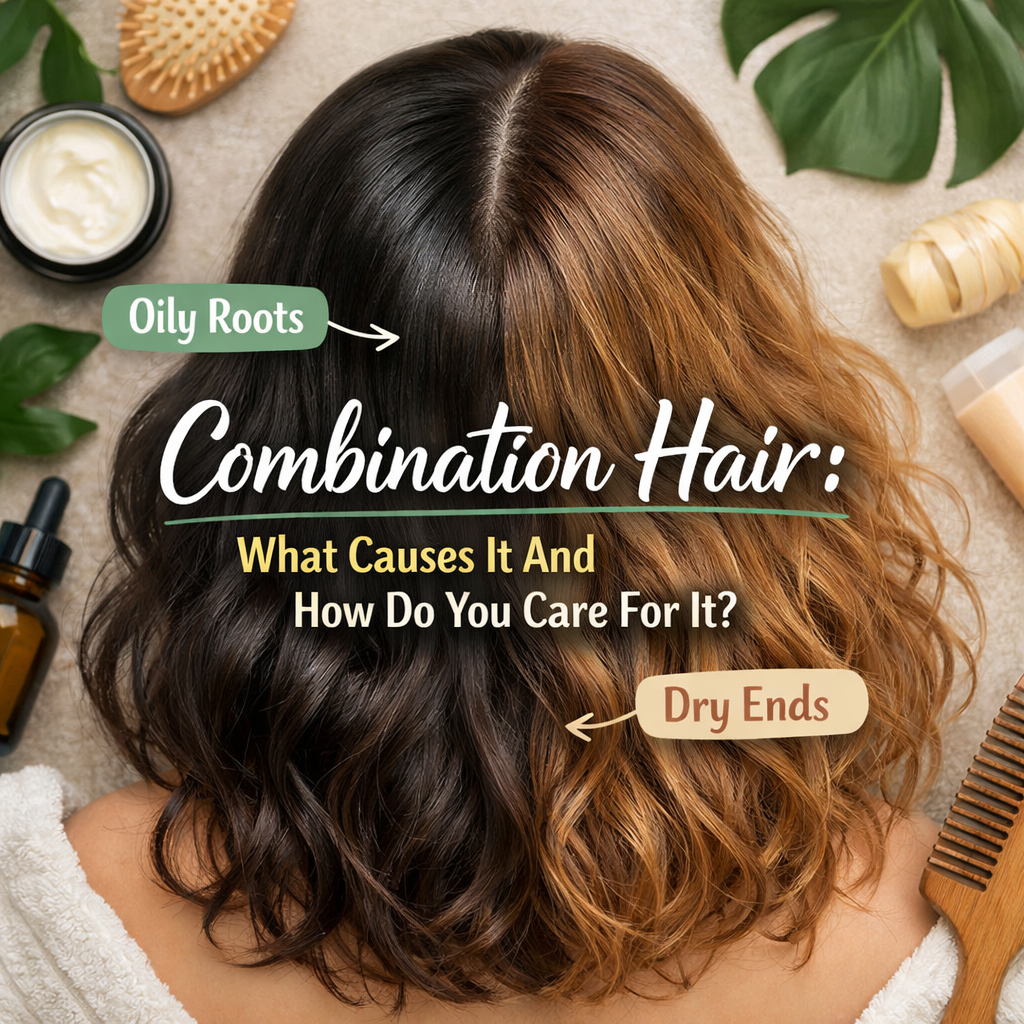
Have you ever heard of combination hair? Yes, just like your skin, your scalp needs to balance dehydration and oil. The fact is that combination hair is characterized by having oily roots and dry lengths. Does this sound familiar?
If you have combination hair, your scalp overproduces oil, but it is not distributed evenly throughout your hair shaft to the ends. The good news is that treatments are available to address this.

What Causes Combination Hair?
Hair habits, the environment, lifestyle, and genetics can all contribute to combination hair. For example, using many different hair products or overexposing your hair to chemical treatments can lead to hair that is both oily and dry.
For this reason, you must use products carefully and ensure you use the right ones. Also, wash the products well. Even the weather can impact your hair: winter can dry it out, while summer can increase scalp oiliness.
The same applies to different climates, where pollution can also impact hair. Lifestyle factors, such as stress, can also be a factor. When you’re stressed, your stress hormone levels spike, creating an imbalance in sebum (natural oil) on your skin and scalp.

What Hair Types Are Considered Combination?
While thick, curly, straight, and fine hair are classified as a combination, the most dominant hair texture is long, fine hair, which is most likely to produce more scalp oil.
If you fall into this category, you have more oil glands than someone with coarser hair, so your roots get dry. The longer your hair is, the more likely the ends are to be dry, as they are older and weathered.
Still, if you have curly hair, you are no exception when it comes to combination hair. If you have curly hair with an oily scalp, your hair produces more sebum that doesn’t travel down the hair shaft, resulting in a greasy scalp and dehydrated ends.
How to Care For Your Combination Hair
Once you determine what causes your combination hair, it helps to know how to care for it.

Prevent Overwashing Hair
To help solve your hair problem, wash it less frequently, such as once or twice a week. Overwashing your hair can cause scalp irritation, particularly if you use hard water. It can also strip your scalp of its natural oils, leading to an overproduction of oil or greasy roots.
Tips: We know you need wet hair for styling, but try rinsing your hair with filtered water or using a shower filter to protect it against hard water. Then, use shampoo and conditioner to keep the ends hydrated, making them easier to manage.

Brush Your Hair Often
The main reason for combination hair is that the oils on your scalp do not make it down your strands. Brush your hair regularly, starting at the roots and working your way to the ends. Additionally, brushing your hair before rinsing will help lift product buildup, dirt, and debris, making shampooing more effective.

Use The Right Products
Using the right products for your hair is essential; neglecting them can exacerbate the problem. Select hair products based on your specific concern and hair type, and follow the directions provided.
Another great product is a scalp scrub, which soothes the scalp and buffs away dead skin cells to target imbalances.
Exfoliating your scalp helps you use shampoo less frequently.

Avoid Using Heat Tools
Use heat tools sparingly if you have combination hair, as overuse strips the scalp and ends. Always use a protective spray and refrain from using hot tools whenever you wash your hair. Daily shampooing and subsequent heat styling can weaken and dry out hair from mid-lengths to ends.
Do You Have Combination Hair?
Once you identify that you have combination hair, it helps to follow a proper hair routine and use the correct products to care for your scalp and strands in a balanced way.
When you find the balance, your hair will look and feel healthy. However, if your routine still leaves your hair feeling imbalanced or if you notice the problem worsening, we recommend that you visit us.
We can recommend the products and routines that work perfectly with your hair during a consultation. The same applies if you are unsure whether you have combination hair.
FAQ
How often should I wash my combination hair?
We recommend washing your hair once or twice a week, but you can adjust the routine if your hair feels particularly oily, smells unpleasant, or is dirty.
How should I care for my combination hair?
We recommend avoiding overwashing your hair, as this can cause more sebum to build up, leaving your scalp oily and your strands dry.
What is combination hair?
If you have combination hair, you have an oily scalp with dry ends, which indicates that the natural oils are not traveling down your hair shaft. It can make it difficult for you to manage your hair.