Sleeping should be relaxing, not a nightly battle with frizz, split ends, or breakage. But many of us wake up to tangled strands, dryness, or flat, lifeless hair due to simple sleep habits.
Hair damage while sleeping is real, caused by friction, moisture loss, and improper handling of the hair at night.
Whether you’re sleeping with long hair or managing curls, adding a thoughtful nighttime hair care routine and smart protection strategies can transform your mornings and help your hair stay stronger, shinier, and healthier.
5 Practical Ways to Protect Your Hair While Sleeping

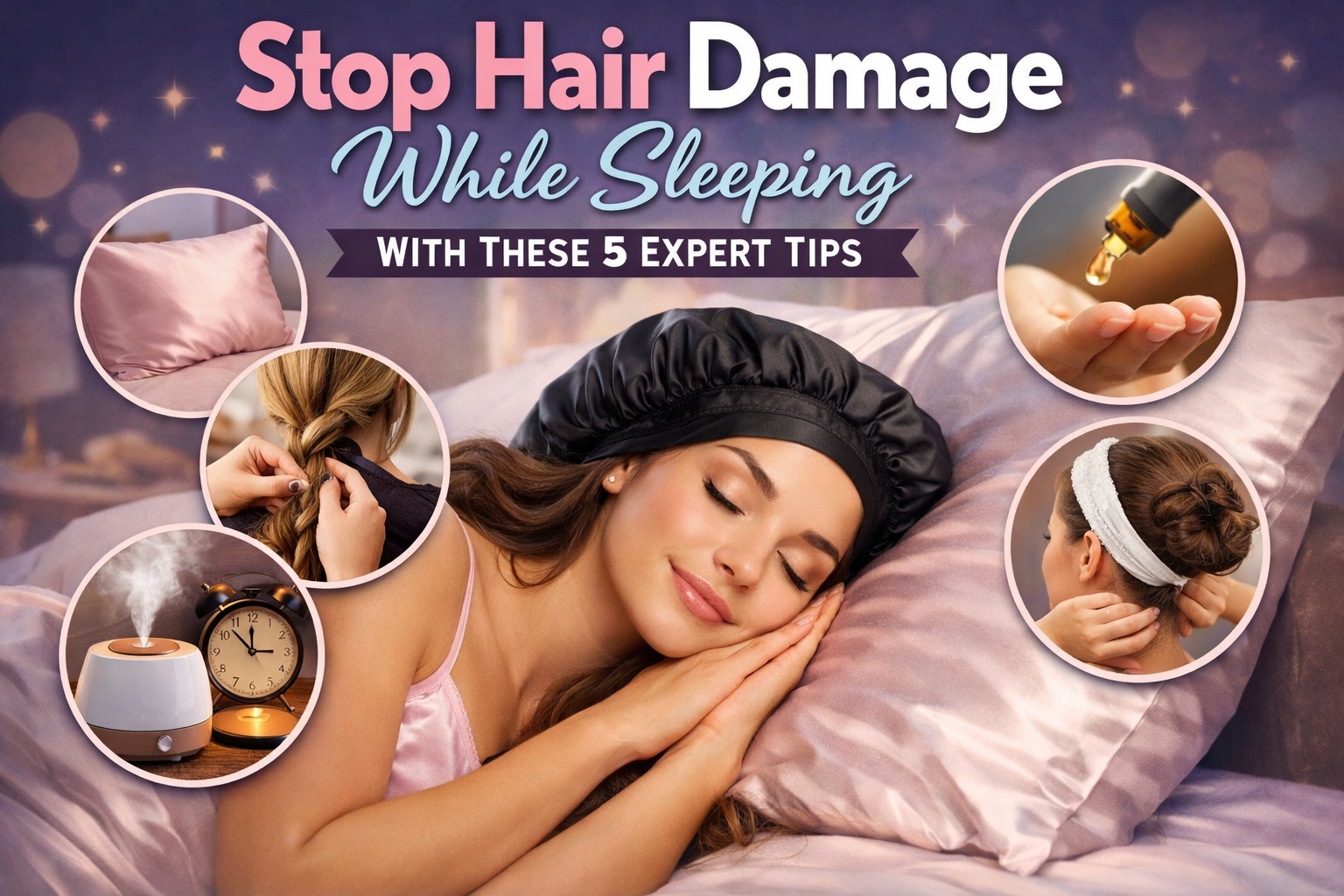
Protective Step #1: Silk & Satin – Pillowcases, Bonnets, Scarves
Silk and satin are your hair’s best friends at night. Unlike cotton, these fabrics reduce friction and help retain moisture, keeping hair smoother and preventing frizz.
✅ Options:
- Silk pillowcases: Glide gently under your hair and protect strands from snags.
- Silk or satin bonnets/scarves: Secure hair and prevent breakage, especially for long or curly styles.
🛌 If you only try one thing tonight, start with silk. Your hair will thank you by morning.
Personalization Guide:
- Curly hair: Silk bonnet to preserve curl pattern
- Long hair: Loose braid under silk scarf
- Fine hair: Light silk pillowcase to prevent flattening
- Thick/chemically treated hair: Satin-lined bonnet to reduce dryness and friction.
✨ We recommend using pillowcases or bonnets with elastic edges that stay on throughout the night.

Silk vs Satin Pillowcase, Bonnet, Scarf, & Cap — Comparison Matrix
| Feature | Silk Pillowcase | Silk/Satin Bonnet | Silk/Satin Scarf | Hair Cap (Cotton/Satin Blend) |
| Friction Reduction | ⭐⭐⭐⭐ | ⭐⭐⭐⭐ | ⭐⭐⭐ | ⭐⭐ |
| Moisture Retention | ⭐⭐⭐⭐ | ⭐⭐⭐ | ⭐⭐ | ⭐⭐ |
| Hair Protection | Medium (hair moves on pillow) | High (hair fully covered) | Medium (depends on tying) | Medium |
| Ease of Use | High (sleep on it) | Medium (must fit snugly) | Medium (requires wrapping/tucking) | High |
| Best for Hair Types | Curly, wavy, fine, long | Curly, thick, long, chemically treated | Curly, wavy, medium length | Short to medium length, fine to medium hair |
| Styling Flexibility | Low (pillowcase only) | High (can secure styles inside) | Medium (tie styles inside) | Low |
| Durability | Medium (requires care, hand wash) | Medium-High | Medium | High |
| Cost | $$$ | $$-$$$ | $-$$ | $ |
✨ If you only want one protective solution, silk pillowcases plus a loose braid or bonnet offer the best overnight hair protection while retaining moisture.

Protective Step #2: Night-Friendly Hairstyles
When sleeping with long hair, nighttime hair care routines count, and one of them is protective hairstyles to prevent tangles and minimize friction while you sleep.
✅ Options:
- Loose braid: Keep your hair together without tension
- Loose bun: Reduces contact with the pillow
- Pineapple (for curls): High ponytail that preserves curls
Step-by-Step:
- Brush gently to detangle
- Gather hair loosely
- Secure with a silk scrunchie or soft fabric tie
🛌 Avoid tight elastics that pull and break strands, and avoid these common hairstyles that can damage your hair further.
Protective Step #3: Pre-Sleep Hair Prep Routine
When it comes to hair damage while sleeping, it helps to follow this nighttime hair care routine. A pre-sleep routine can make a difference.
🌙 Steps:
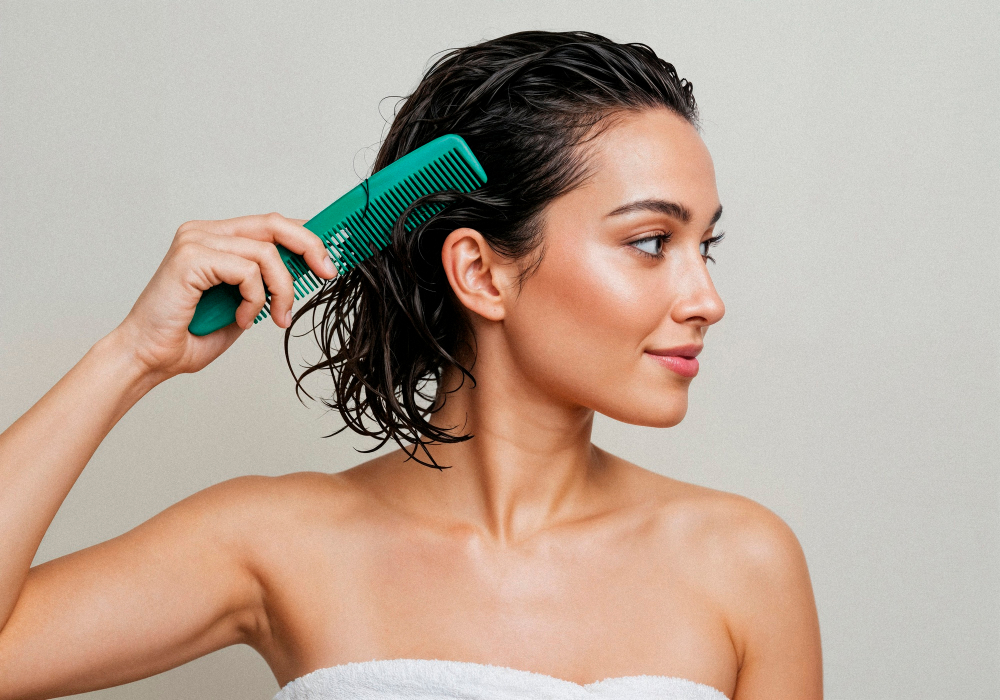
- Detangle with a wide-tooth comb
- Apply a light moisturizer or oil to the ends
- Avoid heavy products that attract dirt and buildup
⏱ Timeline: Start 30–45 min before bed — gives hair time to absorb products.
🛌 Pair with your skincare routine for holistic self-care; it’s more engaging and helps you to make your hair health part of your overall wellness.

Protective Step #4: Never Sleep with Wet Hair
Wet hair is way more fragile because its internal protein structure changes, making it weaker.
Sleeping with damp hair increases the risk of breakage, split ends, and frizz when your hair rubs against fabric throughout the night.
💦 Dry your hair until just slightly damp, then braid or let it finish drying before bed.
Why this matters: Dry hair is stronger and more resistant to friction, which helps keep it healthier over time.
Protective Step #5: Scalp Massage Before Bed
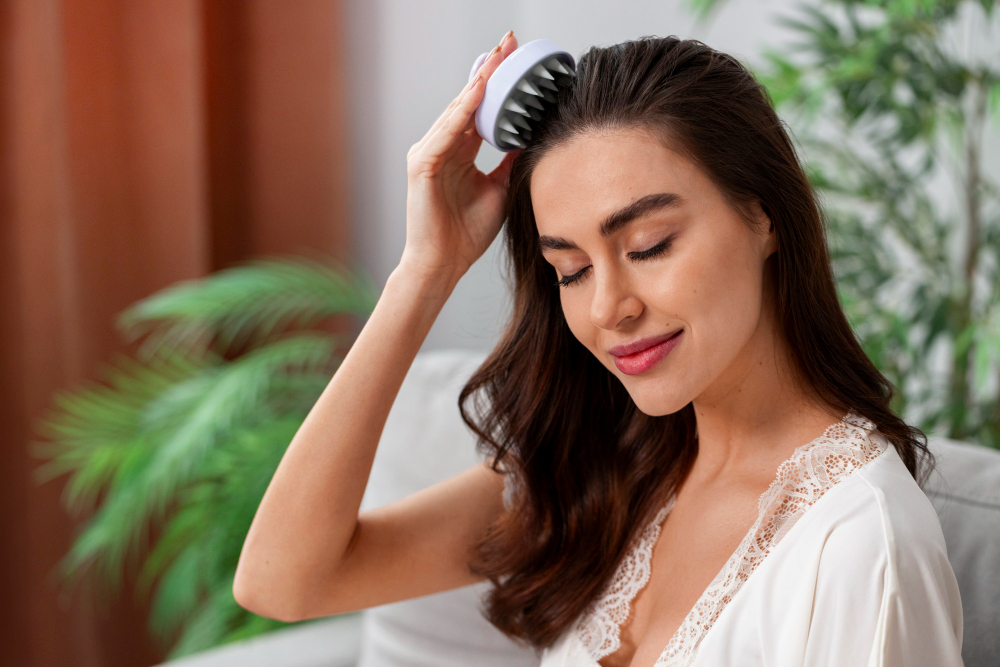
Stimulating your scalp at night supports blood circulation and nutrient delivery to hair follicles, potentially helping hair grow stronger over time.
🛌 Try gentle circular motions for 2-3 minutes before bed to relax and nourish. Pair with a lightweight oil, such as argan or jojoba, for added hydration.

How Sleeping Habits Can Make Hair Worse
When it comes to hair damage while sleeping, even small nightly habits can accelerate hair damage.
✅ Key Culprits:
- Sleeping with wet hair: Hair is fragile when wet because hydrogen bonds in the strands are weaker. Hence, it becomes more prone to breakage during movement.
- Tossing and turning: Constant friction from movement can break cuticles and create tangles.
- Cotton pillowcases: These fabrics absorb moisture and can snag hair, increasing dryness and frizz.
- Tight hairstyles: Elastic bands or tight braids put strain on hair follicles, causing breakage over time.
🔬 Hair is made of keratin protein, which relies on moisture and hydrogen bonds for strength. Disrupting these bonds through wet hair or friction leads to weakened strands and more split ends.
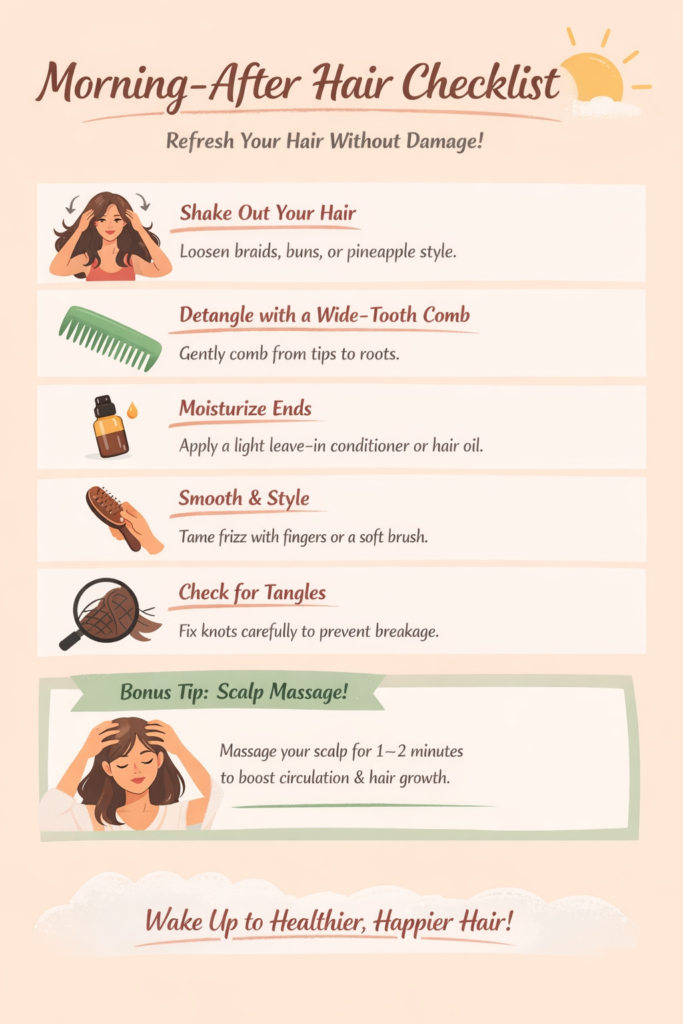
Morning-After Hair Checklist — Refresh Without Damage
Fast Nighttime Routine You Can Start Tonight
A simple three-step routine, from detangling your hair and lightly moisturizing ends, can help prevent hair damage while sleeping.
Put your hair in a loose braid or bun and sleep on a silk pillowcase or in a silk bonnet. Avoid tight hairstyles, wet hair, and cotton pillowcases.
Following these steps reduces hair damage while sleeping, keeping your hair strong, shiny, and healthy.
👉 Book a personalized hair consultation at Haste Urban Hair Spa and get a routine tailored for your hair type today.
FAQ
Does sleeping with a ponytail cause hair damage?
Yes, tight ponytails can stress hair and cause breakage. Use loose styles with soft ties.
Is a satin pillowcase worth the price to prevent hair damage while sleeping?
Yes, satin pillowcases reduce friction, retain moisture, and help prevent breakage and frizz.
How often should you braid your hair at night?
You can braid your hair nightly if the braids are loose.
Can I sleep with wet hair?
No, we do not advise sleeping with wet hair; it’s best to let it dry, as wet hair is weaker and more prone to friction damage.
Should you oil your hair before bed or in the morning?
You can use a light oil on ends to help retain moisture at night, and it’s best to avoid heavy oils as they may transfer to your bedding.