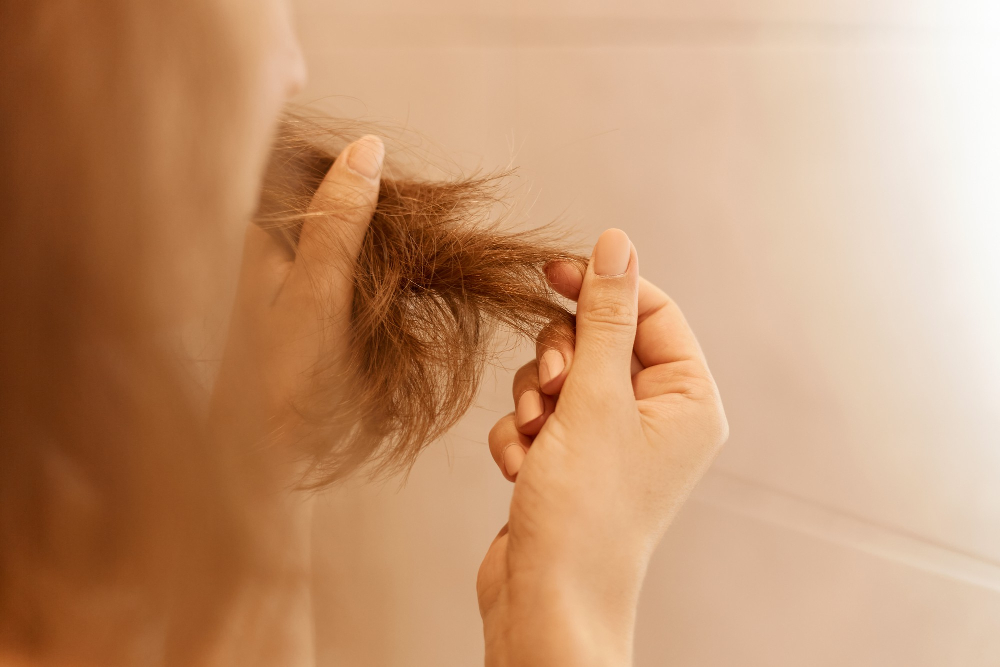
If your hair feels shorter than it should, snaps easily, or refuses to grow past a certain point, you may be dealing with hair breakage, not hair loss.
While hair breakage is often confused with it, the two have different causes, solutions, and recovery timelines. The good news? In most cases, brittle hair can be prevented with proper care, habits, and treatments.
Let’s break down what causes hair breakage, how to tell if you’re experiencing it, and how to help repair it.
Hair Breakage vs Hair Loss: How to Tell the Difference
One of the most common questions we hear at Haste is, “Is this hair loss or hair breakage?” Understanding the difference is essential before choosing treatments.
How to Tell If It’s Hair Breakage
Hair breaking off happens along the hair shaft, not the roots. Signs include:
- Short, uneven pieces throughout the hair
- Frizz that won’t smooth down
- Breakage around bangs, the crown, or the hairline
- Hair snapping during detangling or styling
Hair Loss & Shedding Explained
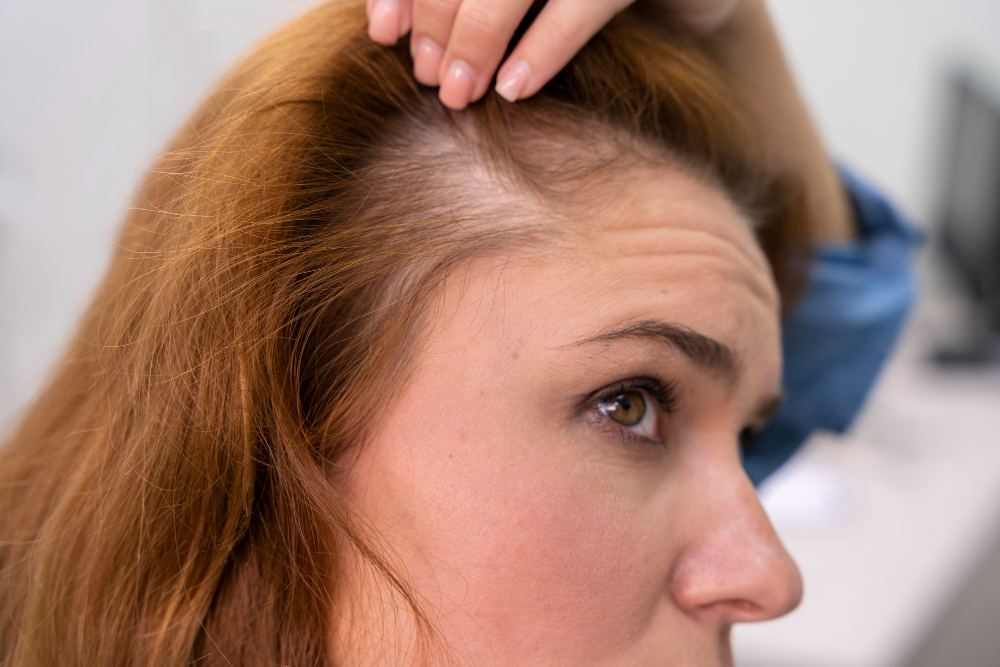
Hair loss and shedding start at the scalp.
- Shed hair has a white bulb at the end
- Losing 50-100 hairs per day is normal
- Excessive shedding or thinning of the scalp may indicate hair loss.
👉 Learn the difference between hair loss and shedding and how to do scalp barrier repair
👀 Quick Test: If the hair you’re finding is short and does not have a white bulb, you’re likely dealing with hair breakage, not shedding.

How Does Moisture Balance Affect Fragile Hair
One of the biggest causes of fragile hair is an imbalance between moisture and protein overload.
Why Moisture Matters
Moisture gives your hair flexibility and elasticity, especially with over-processed hair. When hair is moisturized:
- It stretches slightly without snapping
- It feels soft, not brittle
- It resists everyday stress from brushing and styling
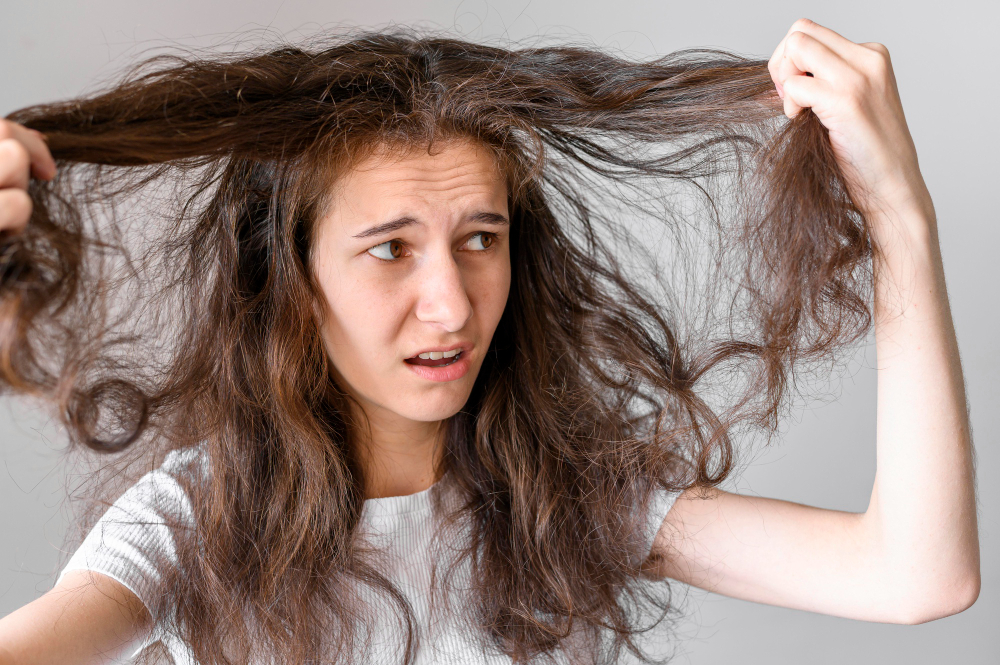
Signs of Moisture Deficiency
- Hair feels dry no matter what you use
- Ends snap easily
- Hair looks dull and lifeless

👉 Learn more about the must-have winter hair care products to add to your routine
Can Too Much Moisture Cause Breakage?
Yes, over-moisturized hair can feel:
- Mushy or overly stretched when wet
- Weak and unable to hold styles
- Prone to breakage due to a lack of structure
⚖️ Balanced moisture is essential; too little or too much can damage hair. Explore some of the best hydrating treatments to keep your hair healthy.
Protein and Hair Breaking Off: Helpful or Harmful?
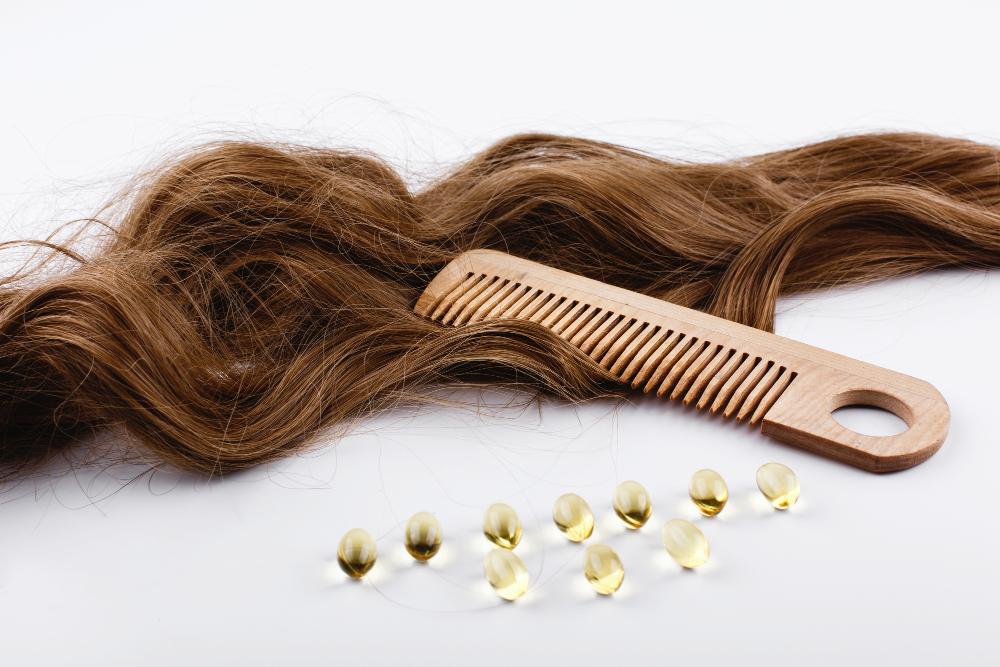
Do Protein Treatments Help Reduce Hair Breakage?
They can when used correctly. Protein strengthens the hair’s structure, especially if your hair is:
- Chemically colored or relaxed
- Heat-damaged
- Fine or fragile
Protein treatments can help reinforce weak areas. Explore the difference between protein moisture to choose the proper treatment suited for your hair.

When Protein Makes Breakage Worse
Too much protein can make hair hard, brittle, and prone to snapping with minimal tension. If your hair feels stiff or straw-like after treatments, you may be protein overloaded.
👀 Salon tip: Alternating moisture treatments with light protein is often safer than using heavy protein repeatedly.
Deep Conditioner for Hair Breakage: What Works

Using a quality deep conditioner for hair breakage helps by:
- Smoothing the cuticle
- Improving slip and detangling
- Restoring lost moisture
👉Learn more about how hard water affects your hair when it comes to moisture, and learn more about hair washing frequency
How Often Should You Deep Condition?
- Fine hair: once every 1-2 weeks
- Medium or coarse hair: once weekly
- Damage hair: weekly with moisture-focused formulas
🌙 Learn more about how you can prevent hair damage at night
Common Deep Conditioning Mistakes
- Applying to dirty hair (buildup blocks absorption)
- Skipping heat when the formula requires it
- Using masks too often weakens the hair
👉 Learn more about deep conditioning your hair and postpartum hair care
Styling Habits That Cause Hair Breakage
Do Buns Cause Hair Breakage Damage?
Yes, when worn too tightly or in the same spot every day, it can cause damage.
- Tight buns stress the same tension points
- Thin elastics can snap strands
- Wet hair buns are especially damaging
👉 Learn more about damaging hairstyles and switch placement often, and use soft, snag-free accessories.
Hair Breakage Around Bangs & Hairline
If you have breakage near bangs, a common problem is:
- Daily heat styling
- Facial friction
- Constant brushing and touch-ups
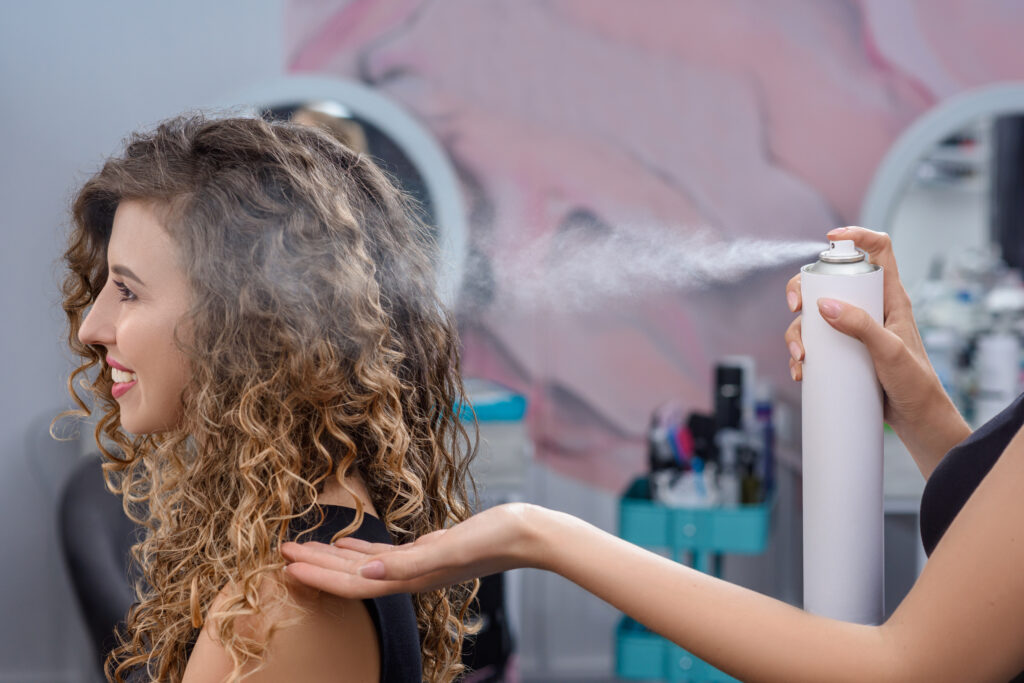
Can Hairspray Cause Hair Breakage?
It depends on whether you use alcohol-heavy sprays, as they can dry out your hair, and the same applies to layering hairsprays. Brushing your hair afterward causes hair to snap.
👉 Find out if hairspray is bad for your hair
Chemical & Product Causes of Hair Breakage

Home Hair Coloring & Hidden Ingredients
Some at-home hair color products contain metallic salts, which:
- Coat the hair shaft
- Cause uneven curls
- Lead to severe discoloration
- Increase the risk of hair snapping
For this reason, we at Haste Urban Hair Spa recommend having a professional consultation before any chemical service.
Product Buildup and Breakage
Heavy buildup prevents moisture from entering the hair, making your strands stiff and fragile. Clarifying occasionally can help, but do not overdo it.
Hairstyles for Hair Breakage Prevention

Protective styles can help reduce stress, not create it.
Breakage-Friendly Styles
- Loose braids
- Low ponytails
- Claw clips with smooth edges
- Silk or satin accessories
Styles to Avoid During Damage Repair
- Tight ponytails
- Daily slick-backs
- Excessive heat styling
Products That Help Stop Weak Hair Strands
When you look for products that help prevent hair breakage, we recommend focusing on the ingredients, not the hype.
Ingredients That Help:
- Humectants for moisture
- Lightweight proteins
- Bond-repair technology
- Slip-enhancing conditioners
👉 What are salon hair products, and are they worth buying?
Ingredients to Be Cautious With:
- High alcohol content
- Heavy waxes and resins
- Too many strengthening agents at once

Can Hair Breakage Be Regrown?
This is one of the most misunderstood topics.
What Regrowth Really Means
Hair breakage doesn’t affect the follicle so that the hair can grow, but broken ends prevent you from seeing the length.
✏️ Learn more about Hair Growth and Hair Retention
How to Support Length Retention
- Regular trims to prevent splits from traveling
- Gentle detangling
- Balanced moisture and protein
- Reducing daily tension
👉 For more length retention tips, read our article here
✨ With consistent care, you will see improvement within 8–12 weeks.

When Professional Help Makes a Difference
If your hair breaks:
- Isn’t improving after consistent care
- Appeared suddenly
- Worsened after chemical services
It’s time for a professional evaluation. Customized treatments and product guidance can prevent further damage and speed up recovery.
👉 Learn how to brush your hair without damage
Stopping Hair Breakage Before It Gets Worse
Hair breakage is frustrating, but it’s also one of the most manageable hair concerns when addressed correctly.
Understanding the difference between breakage and hair loss, maintaining moisture–protein balance, and adjusting everyday habits can completely change the health of your hair.
Healthy hair isn’t about using more products; it’s about using the right ones, the right way.
If you’re concerned about your hair breaking, why not book a consultation with one of our stylists today to help determine the cause?
FAQ
How does moisture balance affect hair breakage?
Moisture balance impacts how flexible and resilient your hair is. When hair lacks moisture, it becomes dry and brittle, increasing the likelihood of snapping. Too much humidity without enough protein, however, can make hair overly soft and weak. Maintaining the right balance helps hair bend without breaking and reduces hair breakage over time.
Do protein treatments help reduce hair breakage?
Yes, protein treatments can help reduce hair breakage when hair is weakened or chemically treated. Protein strengthens the hair shaft and reinforces damaged areas. However, overusing protein can make hair stiff and brittle, which may actually lead to more breakage. Alternating protein with moisture treatments is usually the safest approach.
What’s the difference between hair loss and hair breakage?
Hair loss starts at the scalp and often includes strands with a white bulb at the root, while hair breakage occurs along the hair shaft and produces shorter, uneven pieces with no bulb. Hair breakage is typically caused by mechanical stress, heat, chemical damage, or dryness rather than follicle-related issues.
How can you tell hair breakage from shedding?
A simple way to tell the difference between hair breakage and shedding is to look at the strand. Shedding hair usually has a white bulb at the end and is full-length. Hair breakage is shorter, uneven, and lacks a bulb. Breakage often appears around the crown, bangs, or ends.
What is the best deep conditioner for hair breakage?
The best deep conditioner for hair breakage focuses on moisture, slip, and cuticle smoothing rather than heavy protein. Look for formulas designed for damaged or dry hair and use them consistently without overloading the hair.